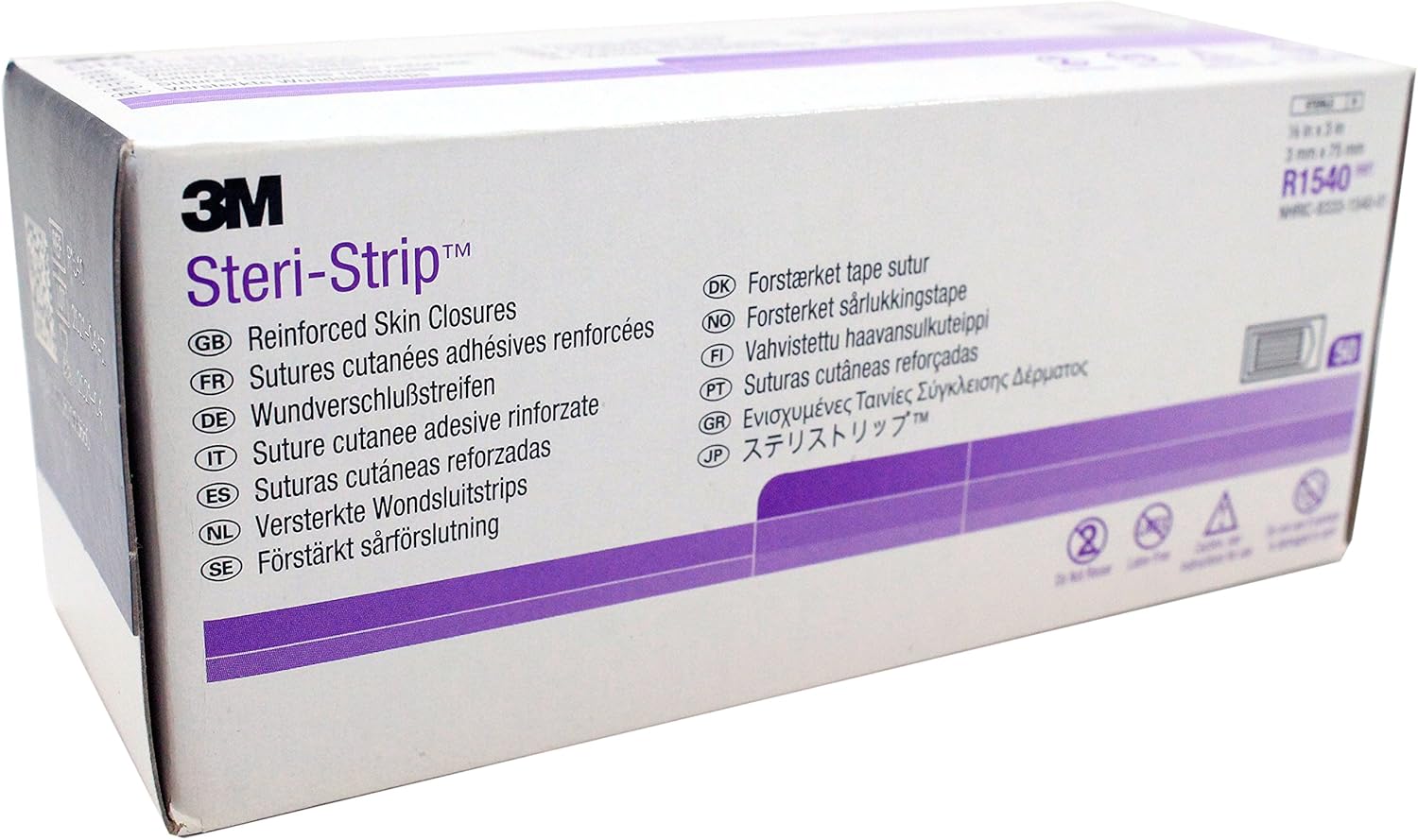
Living With the 3M Steri-Strip Wound Closure Strips
The clinical standard for suturable-wound closure in a consumer-accessible box of 50. Thin, porous, and reliably adhesive — these earn their place in any serious first-aid kit.
There's a category of first-aid supply that most people understock: wound closure strips. Bandages get bought in bulk, antiseptic gets restocked, but closure strips — the ones that actually hold a laceration together while it heals — tend to be an afterthought until the moment they're urgently needed.
The clinical case for strip strips over improvised alternatives is well established. A properly applied wound closure strip holds wound edges in precise apposition, which is the primary mechanical requirement for clean healing and minimal scarring. Improvised tape, even medical-grade paper tape, lacks the reinforced fabric structure and specifically formulated adhesive that makes a purpose-built closure strip work. The difference shows up most clearly on wounds that cross a joint or experience repeated tension — exactly the situations where improvisation fails.
3M's Steri-Strip line has been the benchmark in this category since the 1960s. The R1540 in particular — 1/8" wide by 3" long — is the format clinicians reach for when placement precision matters most. Facial lacerations, finger wounds, and narrow cuts near the eye or lip all benefit from the narrower width, which lets you position each strip with more control than the broader formats allow. The 50-count box is the right quantity for a home or travel kit: enough to handle a serious wound properly, with stock left over.
One technique detail worth knowing: skin prep makes a significant difference in how long these stay put. A tincture of benzoin or a pre-packaged skin prep wipe applied to the surrounding skin before you place the strips can extend wear time from a day or two to five or six days on a mobile site. It's a small extra step that most home users skip, and it's the main reason strips fail prematurely. If you're stocking a serious kit, add a few prep wipes alongside the box.
For the backcountry traveler, the workshop hobbyist, or the parent who has learned to prepare for the unexpected, the R1540 is the kind of supply that earns its place by being exactly right when it's needed. It doesn't photograph as dramatically as a trauma kit or a tourniquet, but a clean laceration closed properly at the trailhead is worth more than most gear you'll carry.