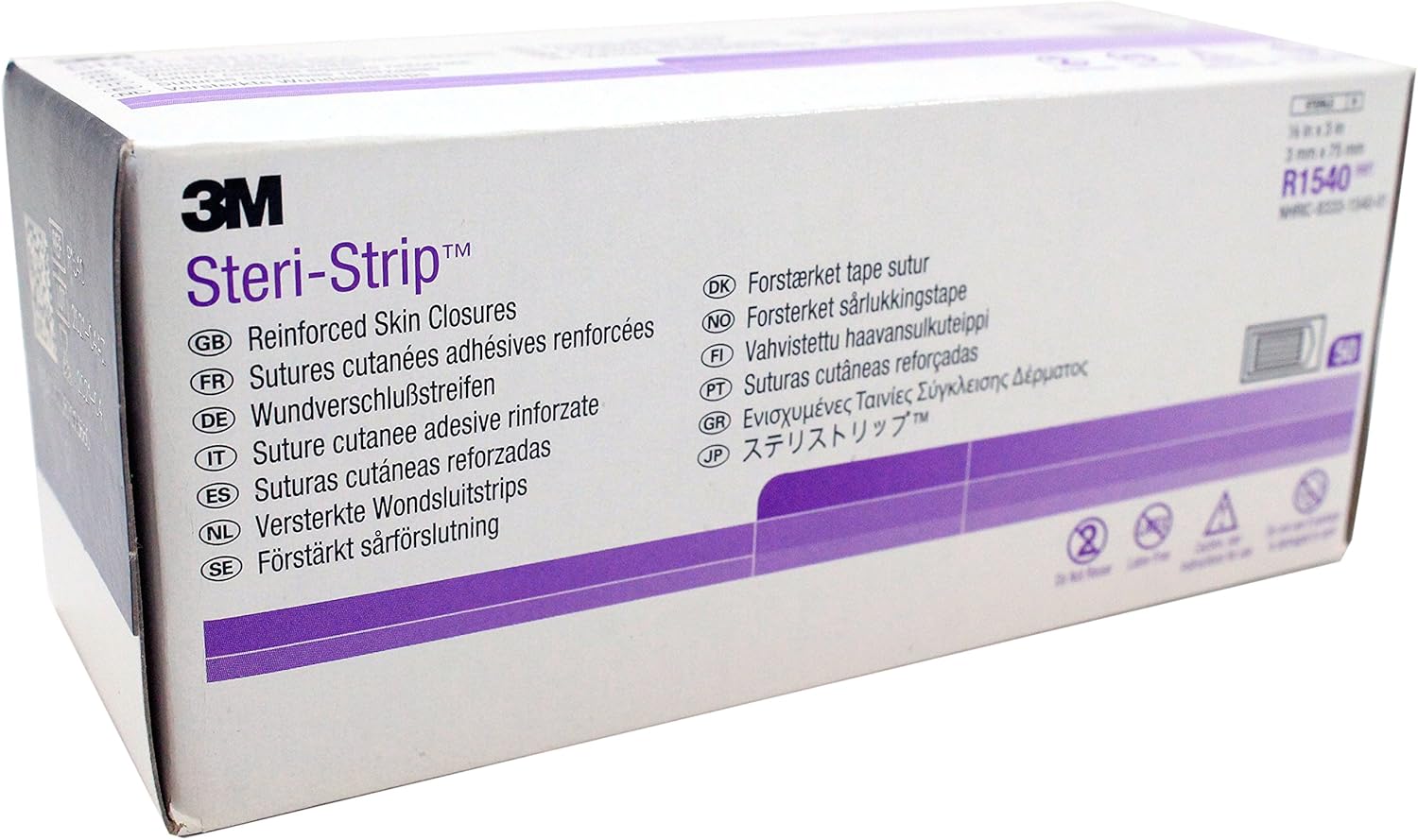
3M Steri-Strip Wound Closure Strips
The clinical standard for suturable-wound closure in a consumer-accessible box of 50. Thin, porous, and reliably adhesive — these earn their place in any serious first-aid kit.

TL;DR Summary
Pros
- Microporous fabric construction allows skin to breathe during healing
- Hospital-grade adhesive formulation holds cleanly on dry, prepped skin
- Narrow 1/8" width enables precise placement on facial and finger wounds
- Box of 50 provides practical stock for multiple incidents
- Decades-long clinical track record gives genuine confidence in the specification
Cons
- Adhesion degrades quickly on high-mobility joints without skin prep wipe
- Narrow format means higher strip count per wound compared to wider variants
- No skin prep wipe included — a separate purchase for best results
View Product
Check availability and current pricing
Affiliate link — we may earn a commission at no additional cost to you. Price shown ($9.99) reflects what we paid at time of purchase and may differ from current seller pricing.
Extended Observations
The clinical standard for suturable-wound closure in a consumer-accessible box of 50. Thin, porous, and reliably adhesive — these earn their place in any serious first-aid kit.
Wound closure strips occupy a narrow but important category in the first-aid world: they sit between a standard adhesive bandage and a full suture, handling clean lacerations that need edges held together without the intervention of a needle. 3M's Steri-Strip line has been the clinical reference point for decades, and the R1540 — a 1/8" × 3" format in a box of 50 — brings that same hospital-grade specification to the home kit.
The strip itself is a reinforced, microporous fabric tape. That porosity matters. Skin needs to breathe during healing, and a fully occlusive closure can trap moisture, soften the wound margins, and slow epithelialization. The Steri-Strip's open weave avoids that problem while still delivering the tensile strength needed to hold wound edges in apposition. The adhesive is a pressure-sensitive acrylic formulation — the kind that bonds quickly on dry skin and maintains hold through light perspiration and normal movement.
Application is straightforward if you follow the basic protocol: clean and dry the skin thoroughly, apply tincture of benzoin or a skin prep wipe to the surrounding area if available (it dramatically extends wear time), then bridge the wound edges with strips placed perpendicular to the laceration. The 1/8" width is the narrowest in the Steri-Strip range, which makes it well-suited for facial wounds, finger lacerations, or any site where precise placement matters more than broad coverage. A box of 50 is a practical quantity — enough to handle a serious wound with proper layering and still have stock remaining.
The user this fits most cleanly is someone who takes their first-aid kit seriously: a backcountry hiker, a parent of active kids, a workshop hobbyist, or anyone who has learned the hard way that a standard bandage isn't enough for a gaping cut at 11 p.m. when the urgent care is closed. These are also a smart addition to a travel kit, particularly abroad where clinical access may be limited.
Two minor caveats worth noting. On very mobile joints — knuckles, especially — the strips will lift at the edges faster than you'd like, particularly without skin prep. And the narrow 1/8" width, while precise, means you'll go through more strips per wound than the wider R1541 or R1542 formats. Neither issue undercuts the core case for keeping a box on hand. At this price point and with this track record, the R1540 is a straightforward recommendation.
Our Verdict
The clinical standard for suturable-wound closure in a consumer-accessible box of 50. Thin, porous, and reliably adhesive — these earn their place in any serious first-aid kit.
Buy NowAffiliate link — we may earn a commission at no cost to you
Discussion
0 commentsSign in to join the discussion
Sign inNo comments yet. Be the first to share.