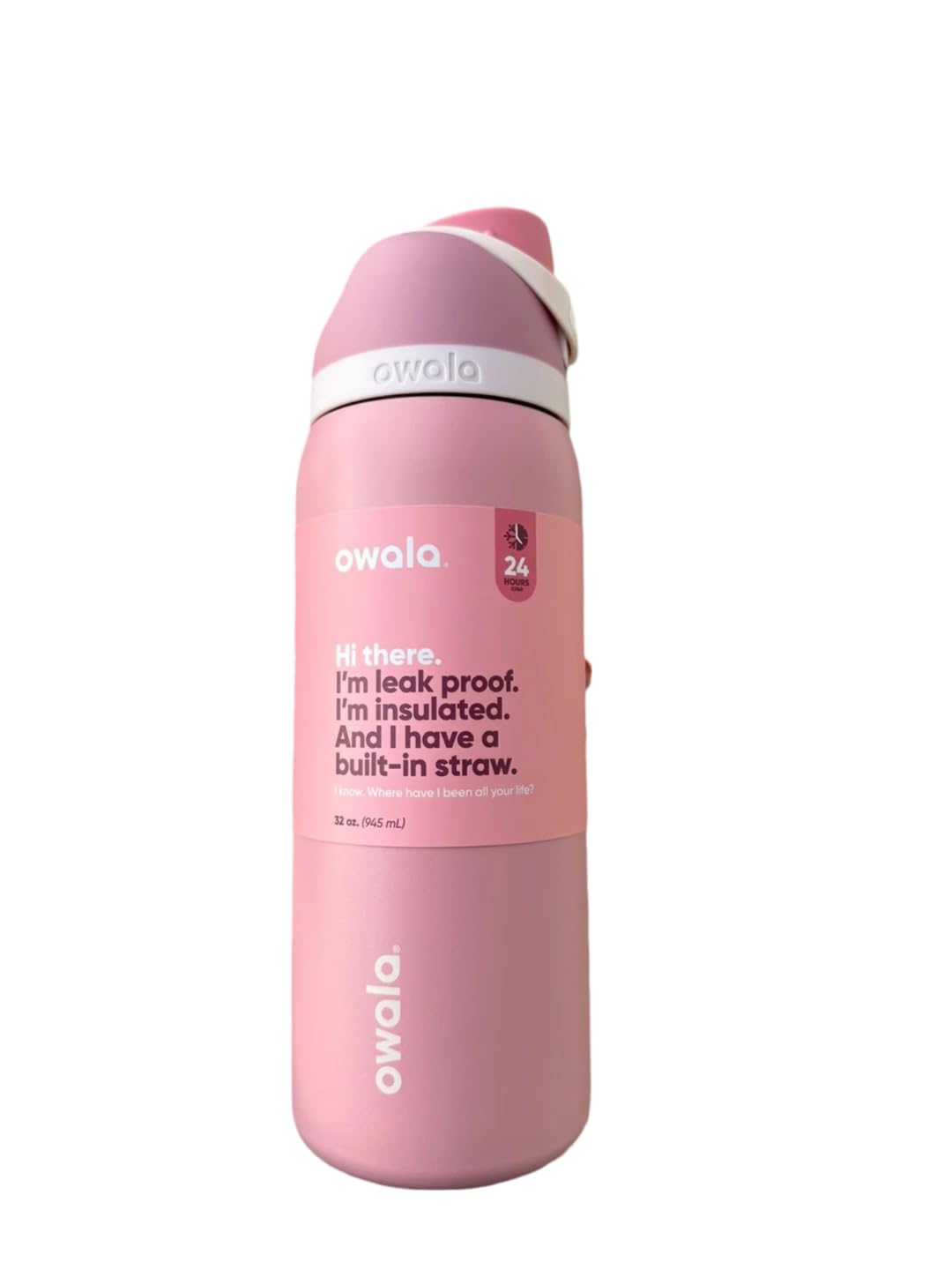
Why the Owala FreeSip 32oz — Rosy Dreams Holds Up
The Rosy Dreams colorway gives the FreeSip's already-solid design a muted pink-toned finish worth carrying in public. Functional lid, honest size, good daily companion.
The rose quartz owala search has been climbing steadily, and it's not hard to understand why. Owala landed on something with the FreeSip — a bottle that functions well enough that people actually want to carry it, which means they also want it to look good. The Rosy Dreams colorway answers that directly.
For context on what makes the FreeSip design worth caring about: most insulated bottles at this price compete on insulation specs and lid simplicity. Owala added a third variable — a lid that does two things without any extra parts to lose. The built-in straw folds away behind a hinged cover; the same opening lets you tilt-drink if you prefer. That dual-mode functionality isn't gimmicky. It's the kind of detail that becomes invisible once you're used to it, which is the best thing a functional object can do.
The Rosy Dreams finish sits in a pink family that reads more muted and mineral than candy-bright. Think of it as the bottle equivalent of a linen shirt in a dusty rose — present without being loud. It photographs well, but more importantly it doesn't look out of place on a work desk, in a gym bag, or clipped to a hiking pack.
Owala's price positioning is interesting. At $39.99, it undercuts Stanley and sits below the premium tier occupied by Hydro Flask and Klean Kanteen. The build quality doesn't feel like a compromise — the stainless body is solid, the lid has no wobble, and the powder coat is applied evenly. What you give up is some of the brand cachet and the wider accessory ecosystem. For most people, that's a reasonable trade.
If you've been circling the rose quartz owala searches looking for something that earns daily carry rather than just photographing well on a shelf, the Rosy Dreams FreeSip is a straightforward answer. It's a competent, good-looking bottle that will still be in rotation two or three years from now — which is the only benchmark that matters.