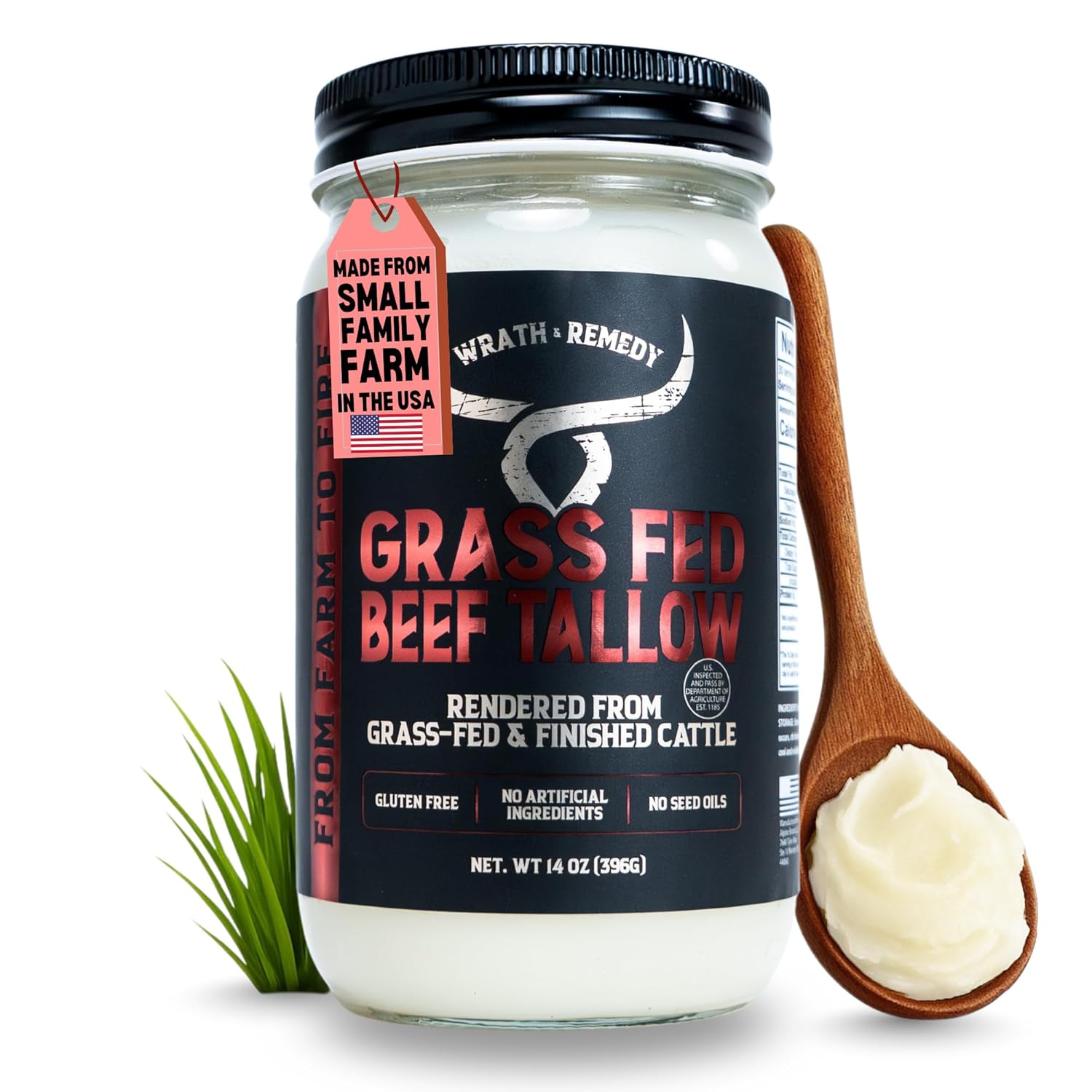
Why the Grass-Fed Beef Tallow for Cooking (14 oz) Holds Up
A clean, US-made grass-fed beef tallow that earns its place on the stovetop — no additives, genuine depth of flavor, and a fat profile that holds up to high heat without apology.
Beef tallow for cooking is one of those subjects that tends to generate more heat than light online. On one side, ancestral-diet advocates treat it as a near-sacred fat. On the other, mainstream nutrition commentary still reflexively flags saturated fat without much nuance. The practical truth sits somewhere quieter: tallow is a stable, flavorful cooking fat with a long history of kitchen use, and the quality of what you buy matters more than the category debate.
The keyword 'beef tallow for cooking' has been climbing steadily in organic search — a signal, picked up in our Semrush data, that home cooks are actively looking for guidance on sourcing and using it. That search intent is worth addressing honestly. Not all tallow is equivalent. Grain-finished beef fat renders differently, smokes at a lower threshold in some preparations, and carries a heavier, sometimes greasy quality compared to grass-finished product. If you're going to make the switch from refined oils, the sourcing detail is worth paying attention to.
For practical kitchen use, tallow excels in three areas: high-heat searing, deep frying, and roasting root vegetables. In a cast iron pan, it builds a crust on beef or lamb that vegetable oils struggle to match — partly because of the fat's composition, partly because the flavor compounds in grass-fed tallow complement the proteins in the meat in a way that a neutral oil simply doesn't. For fries or fried potatoes, the result is a noticeably more complex, savory finish.
Baking is a less obvious application but a legitimate one. Tallow substitutes well for lard or shortening in savory pastry — pie crusts, biscuits, empanada dough — where a neutral animal fat adds tenderness and a subtle richness. It won't work in sweet applications where you'd want a truly flavorless fat, but for savory baking it's a natural fit.
The cook who benefits most from a product like this 14-ounce grass-fed tallow is someone transitioning away from seed oils for health or flavor reasons and wants a reliable, no-additive option they can order without hunting down a specialty butcher. It's not the most economical format for heavy daily use, but as a pantry staple for a household that cooks seriously a few nights a week, it earns its shelf space.