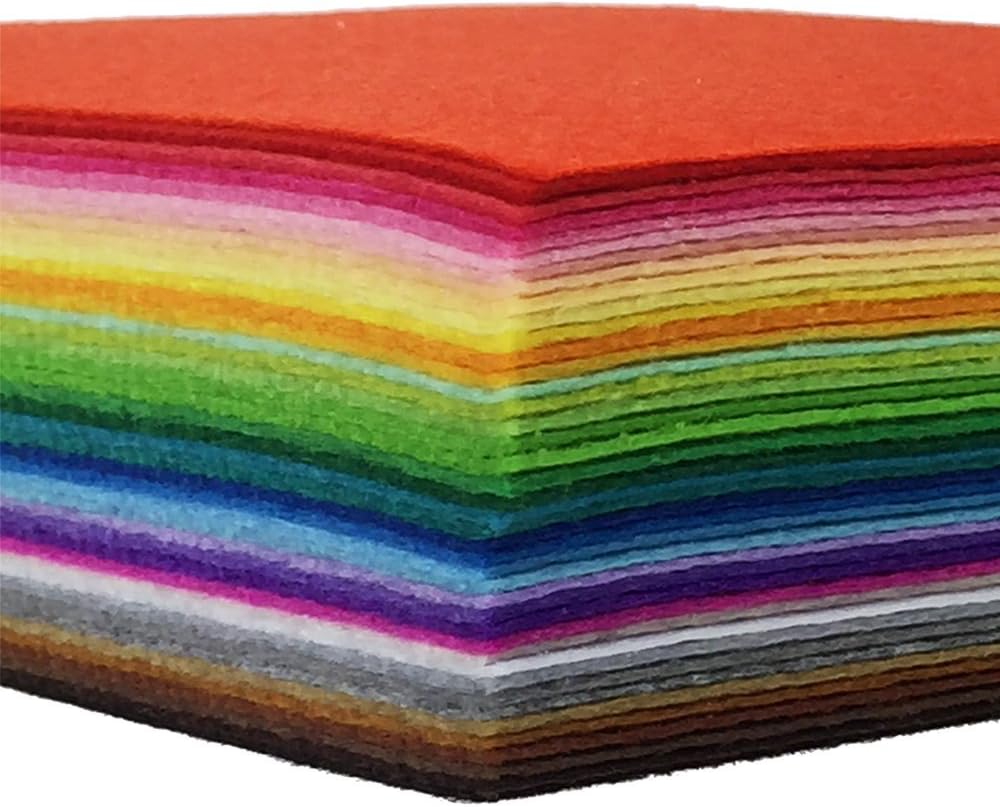
Why the Flic-Flac Assorted Felt Fabric Squares 42pc Holds Up
Forty-two 4×4-inch nonwoven felt squares in a broad color assortment — at under £3.10, this is a genuinely useful starter stock for any crafter who works with felt fabric regularly.
Felt fabric occupies a quiet but essential corner of the craft supply world. It doesn't photograph as dramatically as hand-dyed silk or artisan linen, but it shows up in more finished projects than almost any other material — stuffed ornaments, appliqué patches, classroom decorations, cosplay armor, pin cushions, quiet book pages. The list is long and practical.
The challenge with felt fabric is that it's most useful when you have a lot of it. Variety matters. Running a project that calls for twelve different colors and finding you're short on one specific shade is a familiar frustration. That's the problem a well-curated assortment pack solves, and it's why sets like this flic-flac 42-piece collection have found a consistent audience among crafters who work with felt regularly.
When evaluating felt fabric for craft use, three things matter most: thickness consistency, color saturation, and cut behavior. A sheet that's uneven in thickness will produce inconsistent results when you're cutting multiples of the same shape. Pale or muddy colors look flat in finished work. And felt that frays or pills at cut edges is more trouble than it's worth. The 1mm nonwoven standard used here handles all three reasonably well — it's not a specialty product, but it's a dependable one.
For educators and parents, the economics of this kind of set are worth noting. Craft supply budgets are finite, and felt fabric that costs less than a penny per square centimeter allows for genuine creative freedom — kids can cut, layer, and experiment without anyone worrying about waste. That's a meaningful quality in a teaching material.
The broader flic-flac range scales up through several sheet sizes, which is worth knowing before you buy. The 4×4-inch squares are a starting point and a restocking tool; the larger variants in the family handle projects that need more material to work with. Treating the two tiers as complementary rather than competing is the right approach — stock the small squares for variety, and pull from larger sheets when a single design demands more real estate.