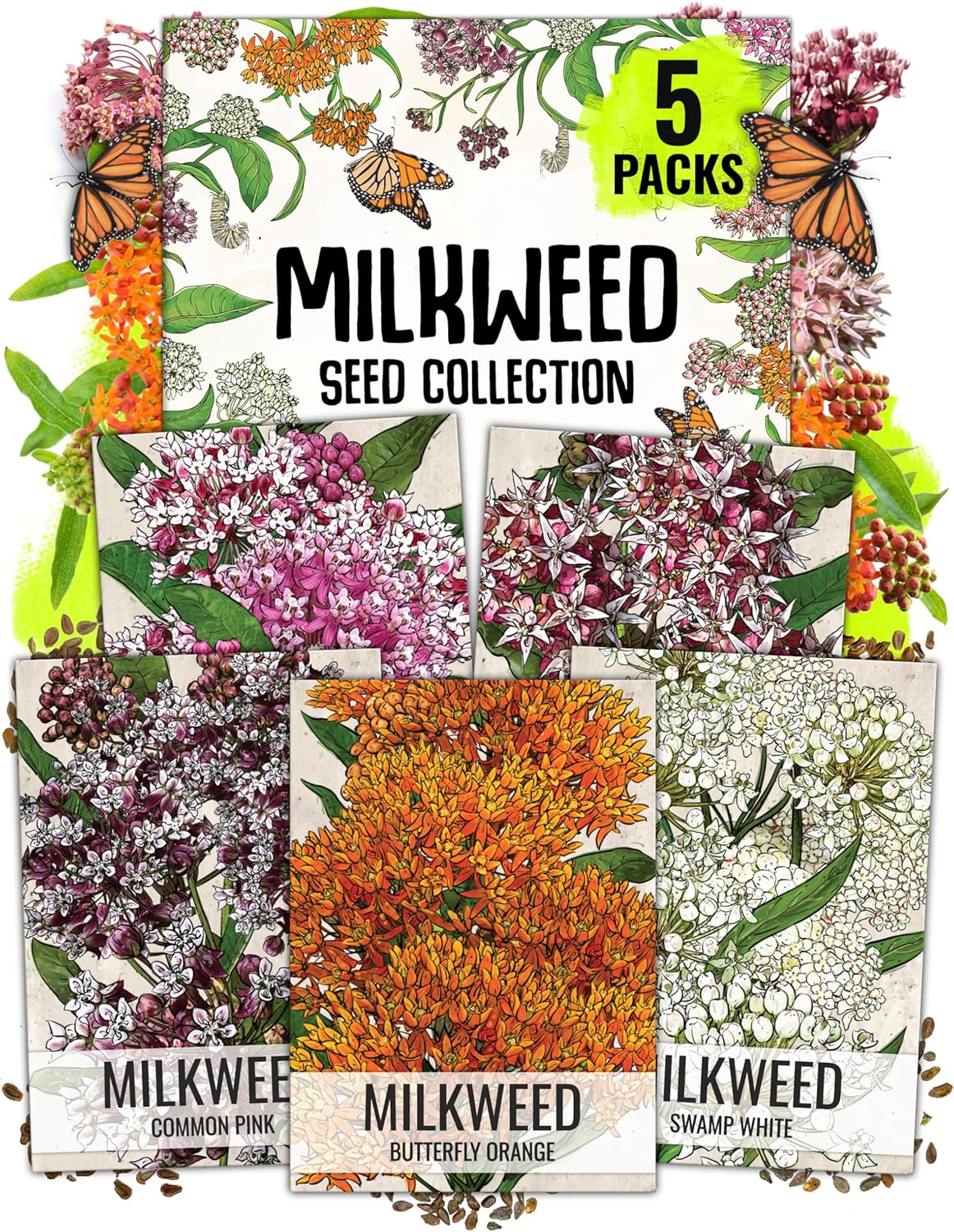
Seed Needs Milkweed Variety Pack (5 Packs): A Considered Take
A thoughtfully assembled trio of Asclepias varieties — pink, orange, and white — that gives monarch gardeners a real foundation without overcomplicating the starting point.
Milkweed seeds have become one of the more searched garden terms in recent years, and the reason isn't hard to trace. Monarch butterfly populations have lost an estimated 80 percent of their North American range over the past two decades, and the culprit is largely the disappearance of Asclepias — the plant monarchs depend on exclusively for egg-laying and larval development. Home gardeners have responded, and the market for milkweed seeds has grown accordingly.
What makes the Seed Needs variety pack worth discussing in that context is the specificity of its assembly. Rather than offering a generic wildflower blend with milkweed listed somewhere in the fine print, this collection focuses entirely on Asclepias, presenting three distinct species across five labeled packets. The pink, orange, and white varieties correspond to different bloom windows, which means a gardener who plants all three in the same season can maintain flowering habitat from early summer through early fall — a meaningful distinction if the goal is to support migration rather than just attract a passing visit.
The open-pollinated designation matters here too. Seeds produced through open pollination maintain genetic diversity across generations, which makes them more adaptable to local growing conditions over time. If you save seeds from a successful planting, they'll behave consistently the following year. That's not a given with hybrid varieties, and for a conservation-minded gardener building a perennial habitat, it's a practical advantage worth factoring in.
The one area where new growers should set expectations carefully is germination. Asclepias seeds evolved to experience winter before sprouting, and in most North American climates that means cold stratification — wrapping moist seeds in a paper towel, sealing them in a bag, and refrigerating them for four to six weeks before planting. It's not complicated, but it's also not optional if you want reliable results. Seed Needs covers this in the included instructions, but it's worth knowing going in that milkweed gardening rewards a bit of advance planning.
For anyone building a pollinator garden from scratch — whether that's a suburban backyard, a community plot, or a school garden project — this collection offers a sensible, affordable starting point. The three-variety structure gives you something to observe and learn from season to season, and the habitat value compounds as the plants establish. That kind of long-horizon payoff is exactly what makes milkweed worth growing.