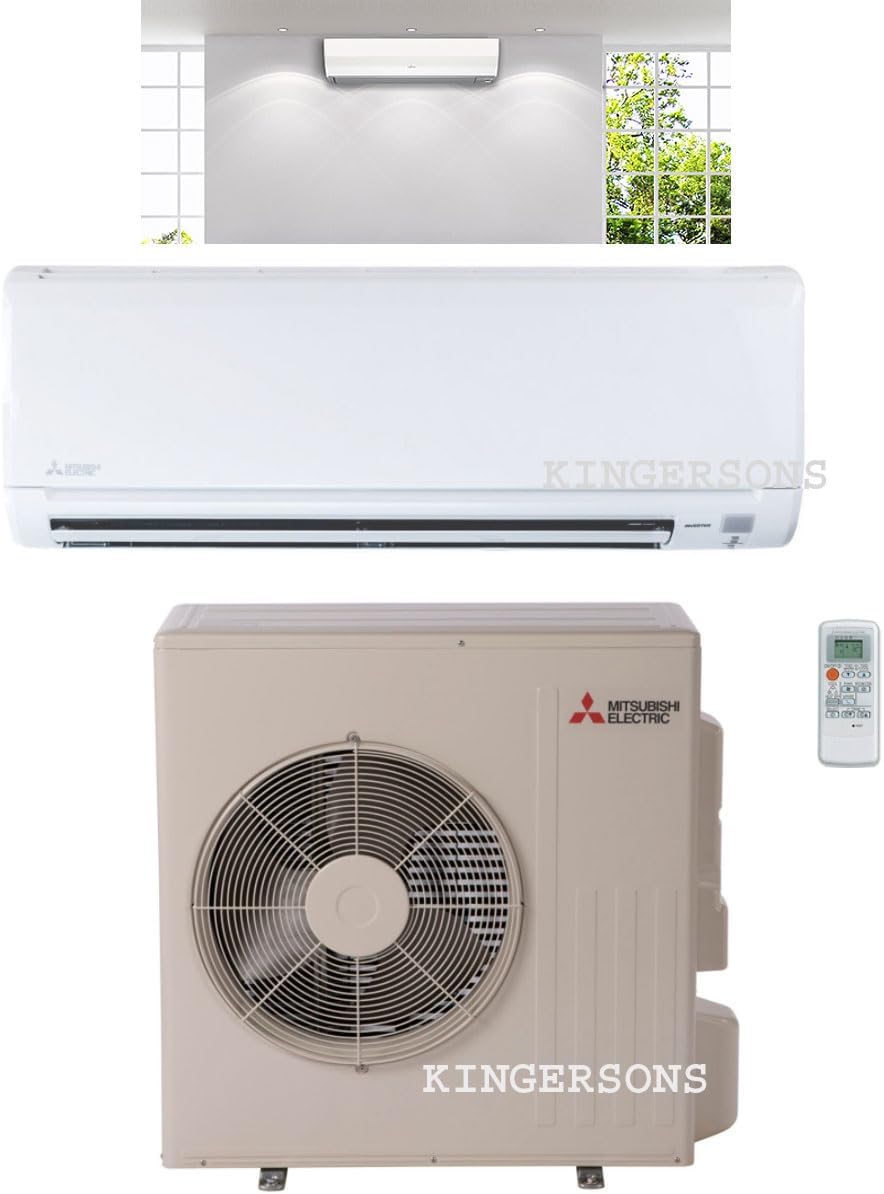
Mitsubishi 9,000 BTU SEER 16 Mini-Split System: A Considered Take
Mitsubishi's 9,000 BTU wall-mount mini-split is a serious piece of climate hardware — inverter-driven, efficient, and built to outlast the decade of use most budget units never see.
The search term 'Mitsubishi mini split' pulls consistent organic volume for a reason: when homeowners start researching ductless climate control seriously, Mitsubishi's name surfaces early and often. That reputation wasn't built on marketing spend. It was built on units that kept running in climates from coastal humidity to mountain cold, installed in applications that window units and portable ACs simply cannot handle well.
The mini-split category itself rewards some context. A ductless system separates the compressor — the noisy, heat-rejecting component — from the air handler inside the room. The two are connected by a refrigerant line set and low-voltage wiring through a small wall penetration. The result is quieter indoor operation, no duct losses, and the ability to condition spaces that were never designed to receive ductwork. Garages, sunrooms, additions, and older homes with radiator heat are the classic use cases.
Mitsubishi's inverter technology is the differentiator worth understanding before comparing specs. A conventional compressor runs at full capacity or not at all. An inverter compressor varies its speed continuously, matching output to demand. On a mild spring day, it runs slowly and quietly, drawing minimal power. On a peak summer afternoon, it ramps up. The room temperature stays tighter, and the compressor avoids the wear associated with constant hard starts. Over a decade, that matters both for efficiency and longevity.
The 9,000 BTU sizing at 0.7 tons is appropriate for rooms in the 350–450 square foot range under typical insulation and ceiling height conditions. Undersizing a mini-split is a common mistake driven by price sensitivity — the unit runs at maximum capacity constantly, efficiency drops, and comfort suffers. Mitsubishi's own sizing guidance and a Manual J calculation from an HVAC contractor are worth the time before purchasing.
For buyers comparing the Mitsubishi entry-level lineup against competitors at similar price points, the honest summary is this: the hardware quality and brand infrastructure justify the premium. Replacement parts exist. Trained technicians are familiar with the platform. The warranty is backed by a company with real U.S. distribution. Those aren't glamorous selling points, but they're the ones that matter when the unit needs service five years from now.