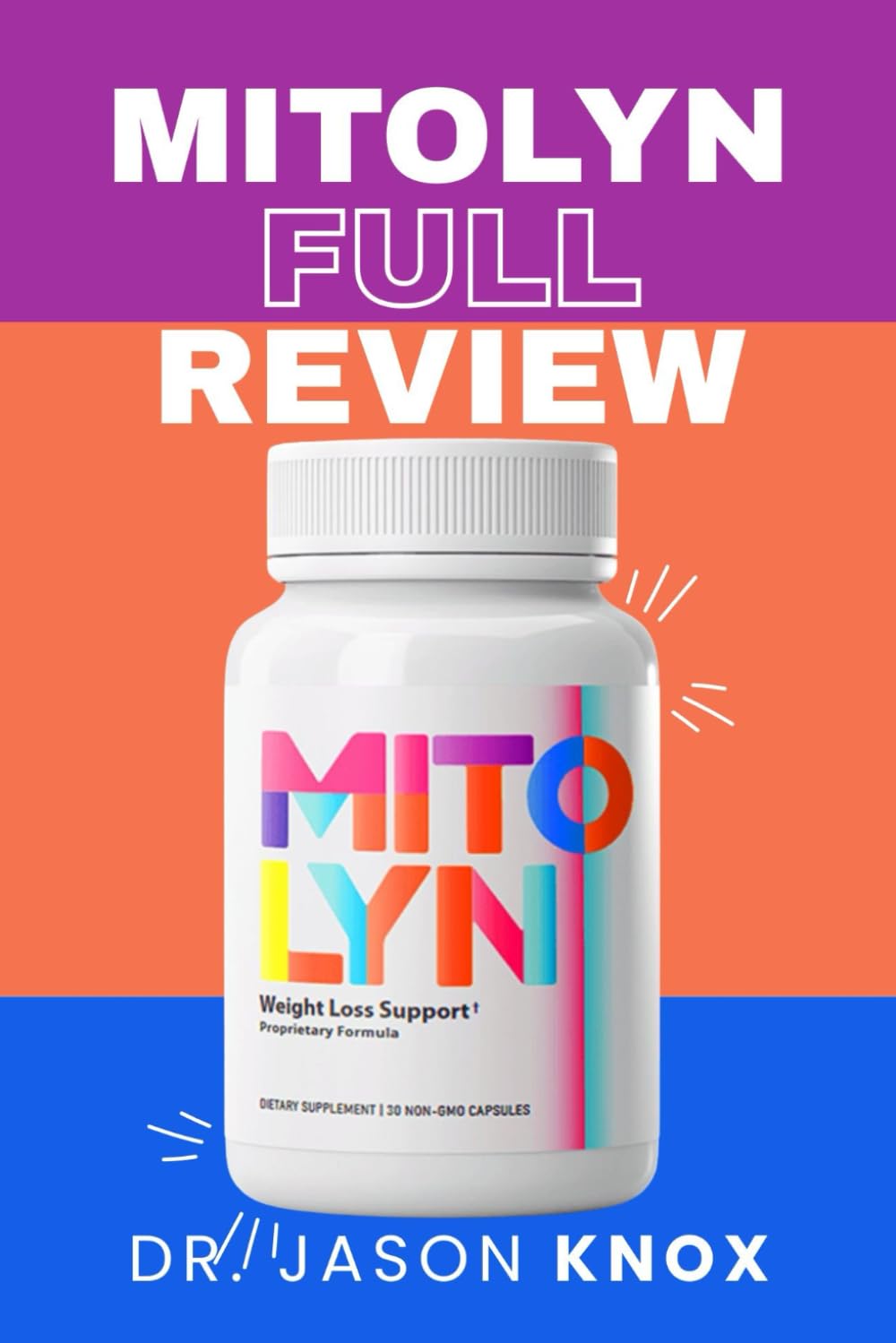
Mitolyn Weight Loss Supplement Review: A Considered Take
A methodical guide to understanding Mitolyn's mitochondrial approach to weight loss — well-structured, science-forward, and useful for skeptical readers who want context before committing.
The supplement research rabbit hole is a familiar one. You encounter a product — maybe through a search, maybe through a friend — and suddenly you're three hours deep into forums, ingredient databases, and contradictory Reddit threads. What's missing from most of that landscape is a single resource that applies some structure to the noise. That's the actual value proposition of a book like Dr. Jason Knox's Mitolyn guide, and it's worth understanding before dismissing it as just another promotional vehicle.
The mitochondrial angle is what separates Mitolyn's positioning from the standard appetite-suppression or thermogenic playbook. Mitochondria as a lever for metabolic health is a research area that has attracted serious scientific attention over the past decade, particularly in the context of aging and metabolic syndrome. Knox builds his framework around this, and while the book isn't a clinical study, it does a reasonable job of explaining why the mechanism is plausible rather than simply asserting that it works.
For readers who found this page through a search on 'mitolyn reviews,' the honest answer is that this book is one of the better starting points available. It aggregates the ingredient science, contextualizes the success stories, and gives you a framework for evaluating the supplement against your own health goals. That's more than most category competitors offer. The caveat — and it's a real one — is that independent clinical data on Mitolyn specifically remains limited, and Knox's citations reflect that gap.
The use case here is specific: someone who is already interested in Mitolyn, wants to understand the science before purchasing, and prefers a structured read over scattered forum opinions. For that person, the $12.99 price of entry is a reasonable research cost. It's not a substitute for a conversation with a physician, particularly for anyone managing metabolic conditions, but as a pre-purchase due diligence tool, it earns its place.
What Knox gets right — and what the supplement book genre often gets wrong — is tone. There's no promise of effortless transformation, no before-and-after theater. The book treats its reader as an adult capable of weighing evidence and making informed decisions. In a category that frequently does the opposite, that restraint is its own form of credibility.