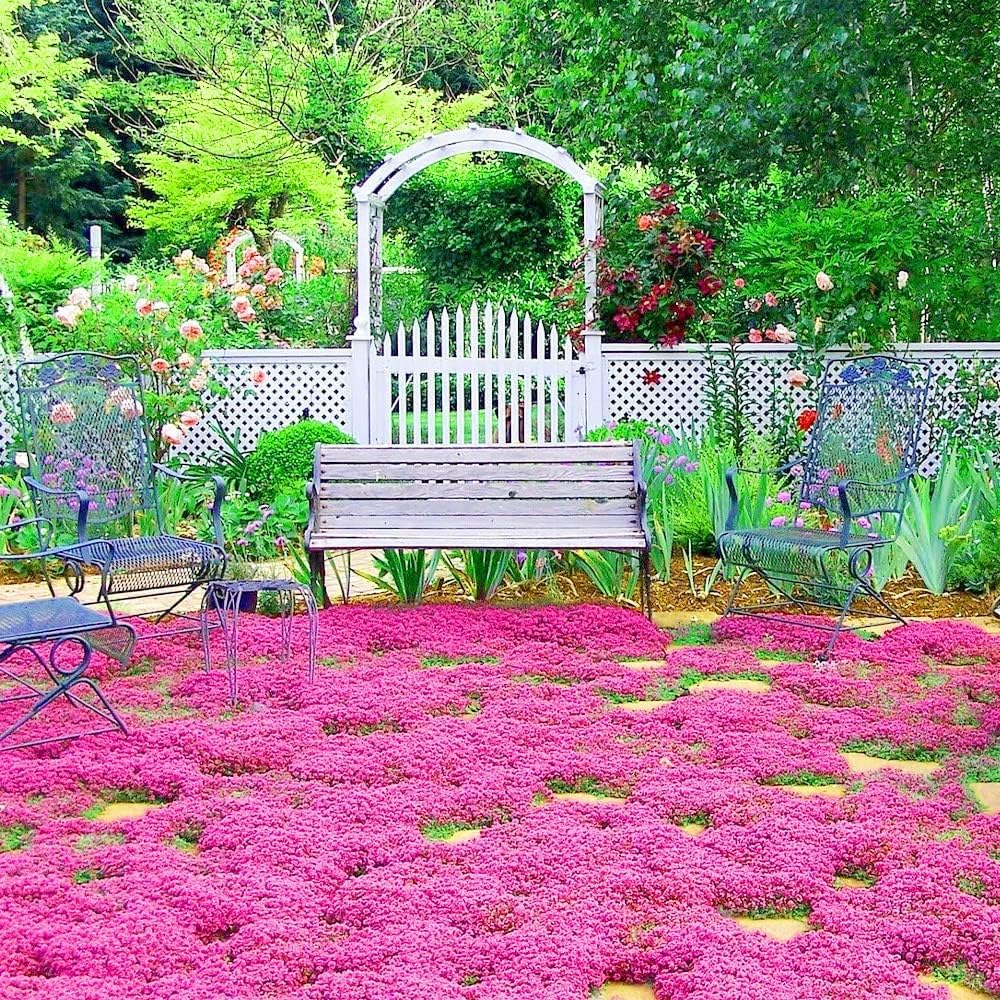
Milamend Red Creeping Thyme Seeds (20,000+): A Considered Take
A generous seed count and non-GMO heirloom credentials make this red creeping thyme an easy recommendation for anyone looking to replace bare ground with something that earns its keep season after season.
Ground cover decisions tend to get made in frustration — after the third time re-seeding a bare slope or edging a gravel path that keeps getting invaded by weeds. Red creeping thyme is one of the more satisfying answers to that frustration, and it's worth understanding why before you scatter a packet.
Thymus serpyllum spreads by both seed and lateral stem growth, which means a planting that looks sparse in year one can close into a continuous mat by year two or three. The red-flowering varieties add a visual payoff in early summer that purely utilitarian ground covers don't offer. Combine that with the plant's tolerance for compacted, rocky, or nutrient-poor soil, and you have something that performs where other plants give up.
For anyone searching for red creeping thyme seeds to establish a new planting, the main variables to evaluate are seed count, germination rate, and genetic provenance. A high seed count matters because fine-seeded perennials like thyme benefit from dense sowing — losses to birds, drying out, or surface disturbance are real, and starting with volume gives you coverage even if germination isn't perfect. Heirloom, open-pollinated stock matters because you want the plants that self-seed in subsequent years to carry the same characteristics as the originals.
Milamend's offering checks both boxes at a price that makes experimentation low-risk. The 20,000-seed count is enough to cover a meaningful area — roughly 50 to 100 square feet at recommended sowing density — and the non-GMO heirloom designation means the planting will sustain itself honestly over time. Surface-sow in early spring or fall, keep the seedbed moist for two to three weeks, and expect to see germination within ten to twenty-one days under reasonable conditions.
The broader lesson here is that red creeping thyme rewards a little upfront patience with years of near-zero maintenance. It handles light foot traffic, releases a mild herbal scent when brushed, and suppresses weeds without the chemical inputs a lawn demands. For the right gardener — one willing to wait a season for the payoff — it's one of the more intelligent ground cover choices available.