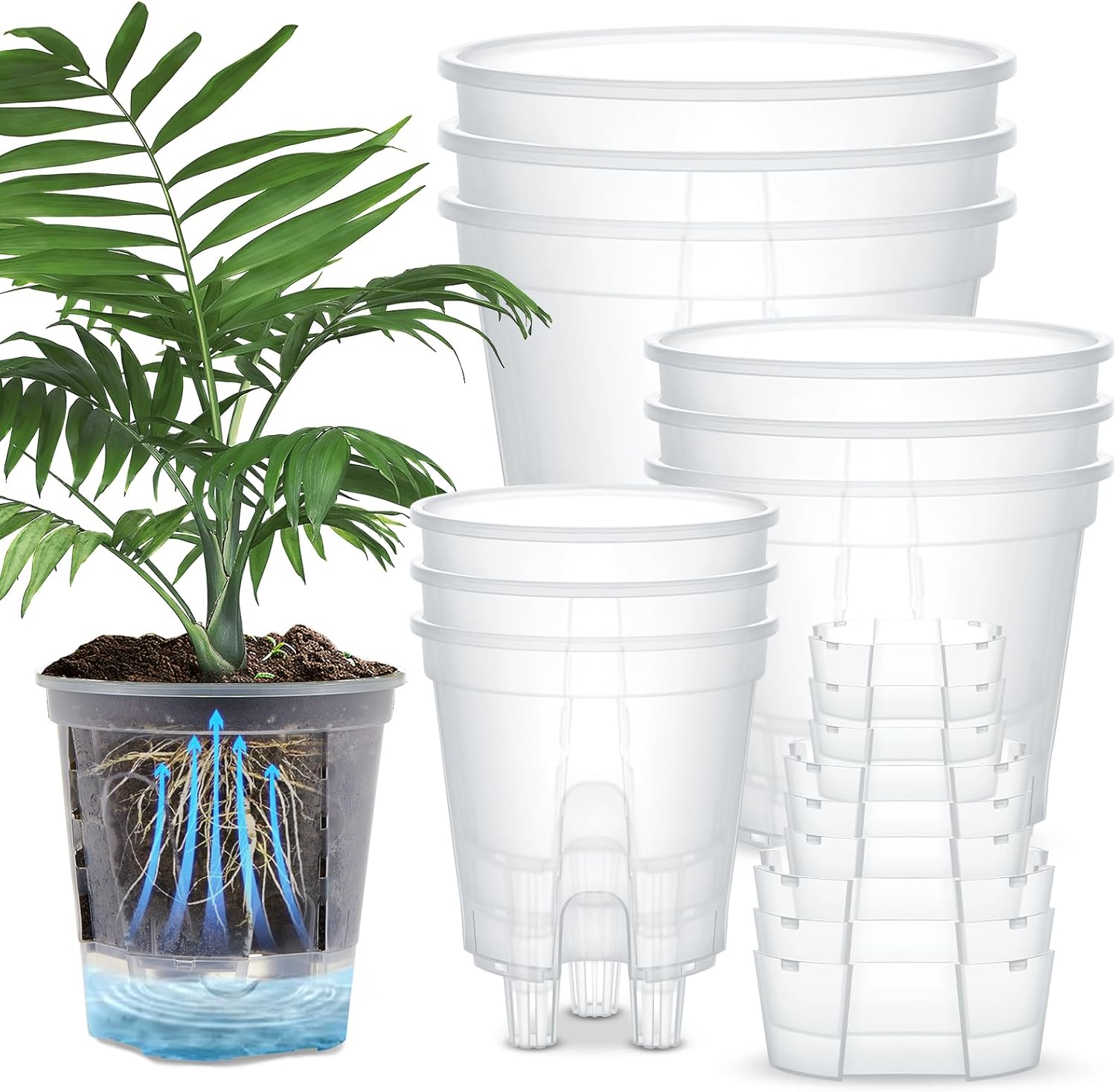
Living With the Wonderjune Self Watering Pots, 9-Piece Clear Set
A well-considered nine-piece set that handles the fundamentals of self-watering design — deep reservoir, real drainage, clear walls — without asking much of you in return.
Self-watering pots have been a category plagued by overpromising. The concept is sound — a sub-irrigation reservoir that feeds roots from below, reducing both overwatering and the anxiety of a missed watering day. The execution, historically, has been inconsistent. Cheap versions flood the root zone. Expensive versions charge a premium for aesthetics that don't improve function. Wonderjune's nine-piece clear set lands in a more honest middle ground.
What makes the Wonderjune design worth a closer look is the drainage hole placement. Positioning those holes higher on the pot wall means excess water exits before it reaches the reservoir level, keeping roots in a moisture-rich but not waterlogged environment. It's a small engineering decision with a large practical payoff — particularly for tropical houseplants that are sensitive to soggy soil.
The clear construction is worth addressing directly. Some buyers will find it aesthetically limiting, and that's fair. But for anyone propagating plants — bare-root orchids, monstera nodes, pothos cuttings — being able to see root development without pulling the plant is genuinely valuable. The transparency turns a functional pot into a passive monitoring tool.
The three-size format (4.72, 5.91, and 7.09 inches, three of each) is well-calibrated for the typical indoor plant enthusiast. It covers the range from a small succulent to a medium tropical without redundancy. At roughly $22 for nine pots, the per-unit cost is low enough that using them as dedicated propagation vessels — then transferring rooted plants to display pots — makes practical sense.
For the person who keeps a dozen plants on a work-from-home desk, travels regularly, or is building out a propagation setup, this set addresses real friction points without unnecessary complexity. It won't replace a handthrown ceramic planter on your bookshelf, but it was never trying to. Knowing what a product is for, and doing that thing well, is its own form of good design.