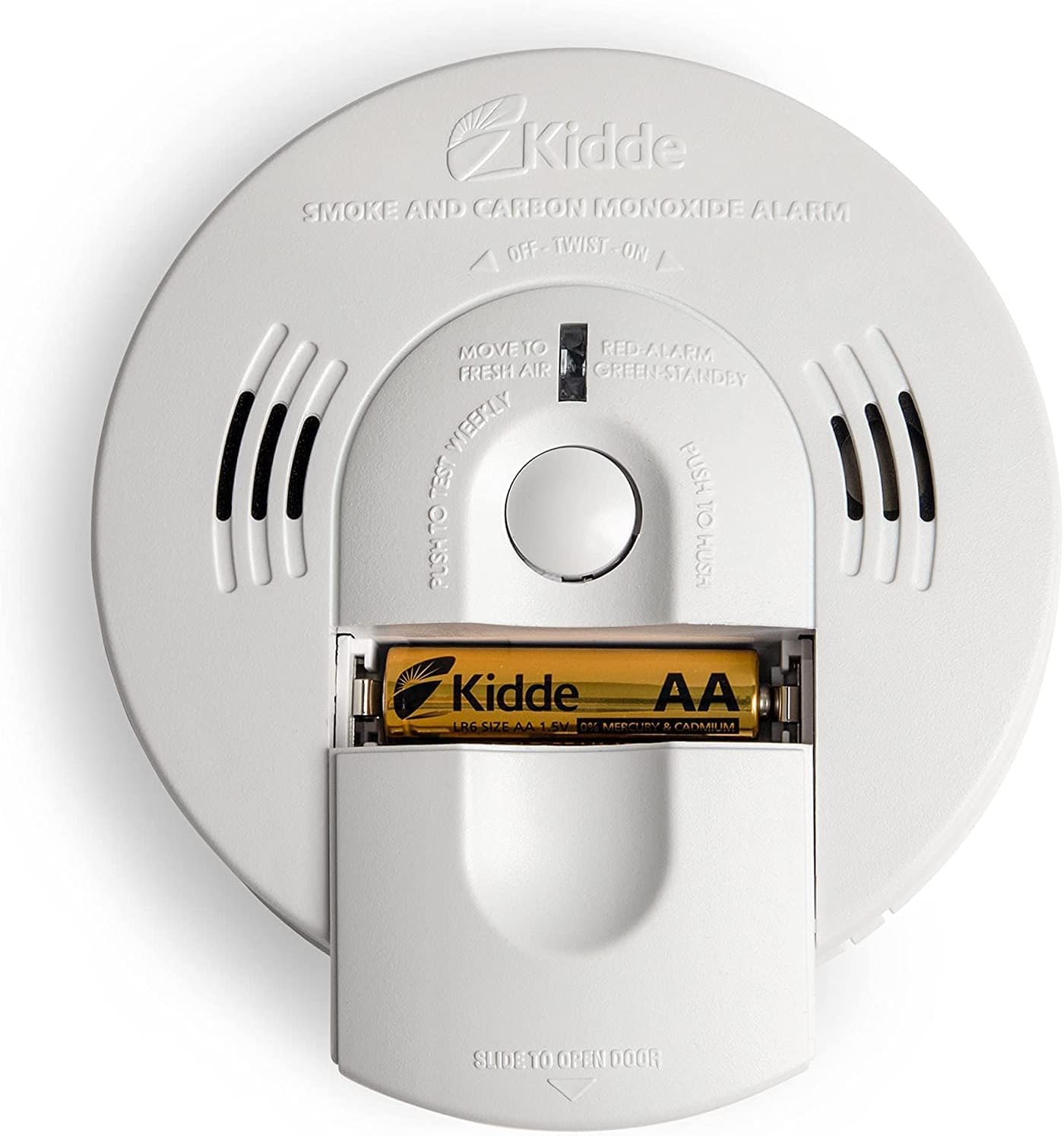
Living With the Kidde KN-COSM-IBA Hardwired Combo Detector
A hardwired combination smoke and CO detector that earns its place on the ceiling — interconnectable, battery-backed, and built for the homeowner who wants a system that actually talks to itself.
There's a category of home product that nobody gets excited about until it saves a life. Smoke and carbon monoxide detectors sit squarely in that category, and the result is that most households treat them as an afterthought — a single battery-operated unit stuck to the ceiling near the kitchen, replaced when it fails a test or starts complaining about low voltage at midnight.
The case for going hardwired is straightforward. A wired unit with battery backup doesn't depend on you remembering to replace batteries on any schedule. The power is always there. The backup is there for outages. You install it, test it, and move on. For a device whose entire job is to be ready the moment you need it, removing a point of human failure is a meaningful upgrade.
The interconnect argument is equally simple. Carbon monoxide is odorless and colorless, and it doesn't announce itself. A CO event in a basement mechanical room may not produce any audible or visual cue to someone sleeping two floors up — unless every detector in the house sounds simultaneously. That's what interconnected systems do. It's the same logic that drives commercial building codes, and it applies just as directly to a three-bedroom house.
Kidde has been in this space long enough that their wiring standards are effectively the industry default for residential interconnected systems. The KN-COSM-IBA uses the same three-wire setup found across their hardwired line, which means adding units to an existing Kidde installation is a direct swap rather than a rewire. For anyone updating an older home's detection system room by room, that compatibility matters.
The broader point is that a kidde fire alarm and carbon monoxide detector like this one rewards the homeowner who treats safety infrastructure the way they'd treat any other long-term investment — buy the right spec once, install it properly, and let it do its job for the better part of a decade. The upfront cost over a battery-operated alternative is modest. The margin for error it removes is not.