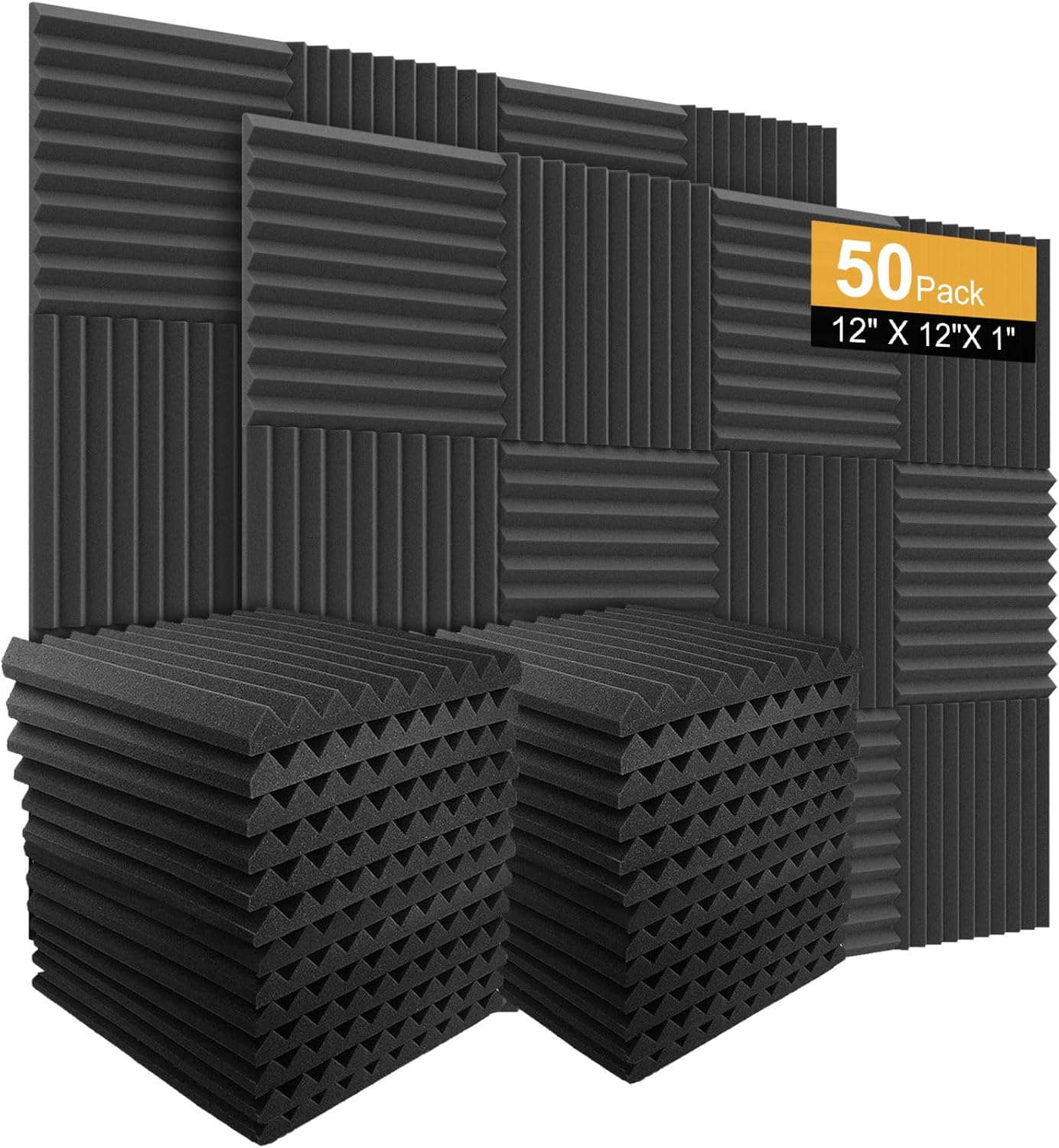
Living With the Burdurry 50-Pack Wedge Acoustic Foam Panels
Fifty 12×12-inch wedge foam tiles that genuinely tame flutter echo and mid-frequency buildup — a practical, low-fuss entry point for anyone treating a home studio or vocal booth on a budget.
If you've spent any time researching sound dampening panels, you've probably noticed the market splits into two camps: budget foam tiles that look like they belong in a 2005 YouTube setup, and premium fabric-wrapped panels that cost more per square foot than hardwood flooring. For most people building a home studio or cleaning up a podcast room, neither extreme makes sense. That's the gap Burdurry's 50-pack occupies, and it's worth understanding what acoustic foam actually does before you buy any of it.
Acoustic foam panels don't block sound — that's a persistent misconception. What they do is absorb reflected sound energy within a room, reducing the reverb, flutter echo, and comb filtering that make recordings sound muddy or amateurish. The wedge geometry on tiles like these is functional, not decorative: the angled channels increase surface area and break up the parallel paths that cause flutter echo between flat walls. One-inch foam is effective in the 500Hz–4kHz range, which covers most of the frequencies that make vocal recordings and acoustic instruments sound harsh or roomy.
Placement matters more than quantity. Treating the first reflection points — the wall sections directly to the left, right, and above the listening or recording position — will do more for your sound than wallpapering every surface. A 50-tile pack gives you enough material to cover those critical zones in most small rooms and still have tiles remaining for a ceiling cloud or a corner bass treatment (though for actual bass trapping, you'd want thicker, denser material in the corners regardless).
For the podcaster or home musician who's been recording in an untreated room, the difference after a basic treatment with panels like these is immediate and audible. Dialogue tightens up. Acoustic guitar recordings lose that boxy, roomy quality. Reverb tails on electric instruments become easier to manage in a mix. None of this requires a professional installation or a significant budget — it requires covering roughly 15–25% of your room's surface area at the right locations.
The Burdurry panels earn their place in this conversation because they deliver consistent density across the pack, cut cleanly when needed, and stay put once mounted. They're not a permanent architectural solution, and they won't impress anyone who's worked in a properly treated professional studio. But for the bedroom producer, the remote worker on video calls, or the content creator who's tired of their room sounding like a bathroom, these are a practical, low-drama starting point that actually works.