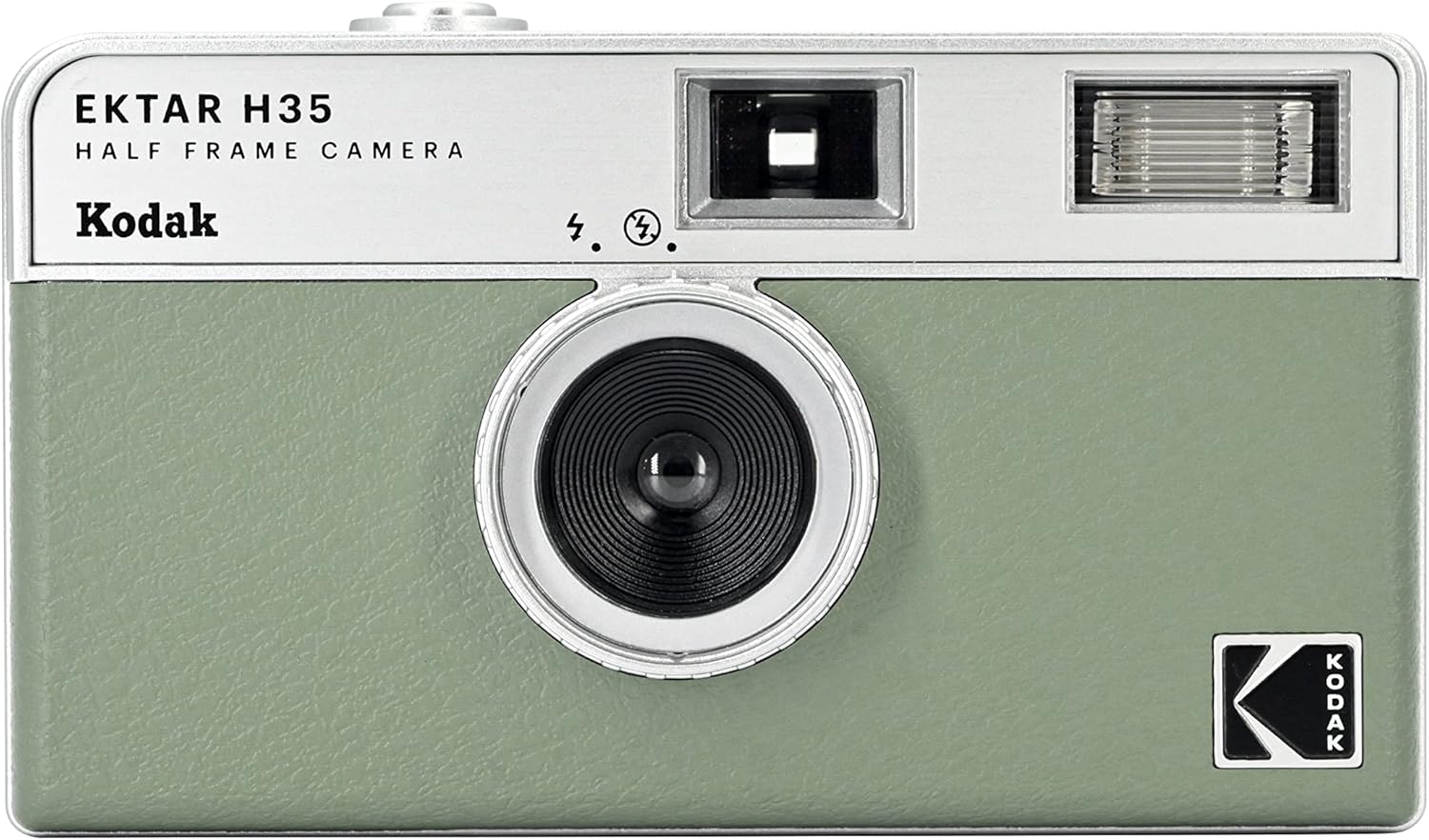
Kodak EKTAR H35 Half Frame Film Camera: A Considered Take
The EKTAR H35 makes a compelling case for shooting film again — half-frame format, a pocketable body, and a low enough price that the learning curve costs nothing.
The film camera category has quietly become one of the more interesting spaces in consumer photography. Not because the technology is new — it obviously isn't — but because the constraints film imposes have started to feel like features rather than limitations. Finite exposures, no instant review, a tangible object at the end of the process. The EKTAR H35 sits squarely in this moment.
Half-frame as a format deserves more attention than it gets. Introduced commercially in the early 1960s, it was originally a cost-saving measure — smaller negatives, more frames per roll. Today, the appeal is different. Shooting half-frame means you get 72 frames from a standard 36-exposure roll, which changes the rhythm of shooting. You slow down slightly on individual frames, but you also run out of film far less often. For travel or events, that's a practical advantage.
Kodak's positioning of the H35 as an entry-level film camera is smart. The price sits low enough that it functions as a genuine introduction — someone who has never loaded a roll of 35mm film can pick this up, watch a two-minute video, and be shooting within the hour. That accessibility matters. The analog revival has sometimes skewed toward expensive vintage gear that requires knowledge and maintenance. The H35 asks for neither.
For those already shooting film, the H35 earns a place as a secondary carry. Pair it with a roll of Kodak Gold 200 or Fujifilm Superia 400 and it handles itself well in daylight. The fixed lens keeps things honest — what you see is roughly what you get, with a slight softness at the edges that reads as character rather than flaw on the final print.
The broader takeaway is that the film camera market has room for products at multiple price points, and Kodak has understood that. The EKTAR H35 isn't trying to compete with a Contax T2 or even a well-maintained Olympus Stylus. It's trying to get more people shooting film, and on that measure, it succeeds without much argument.